
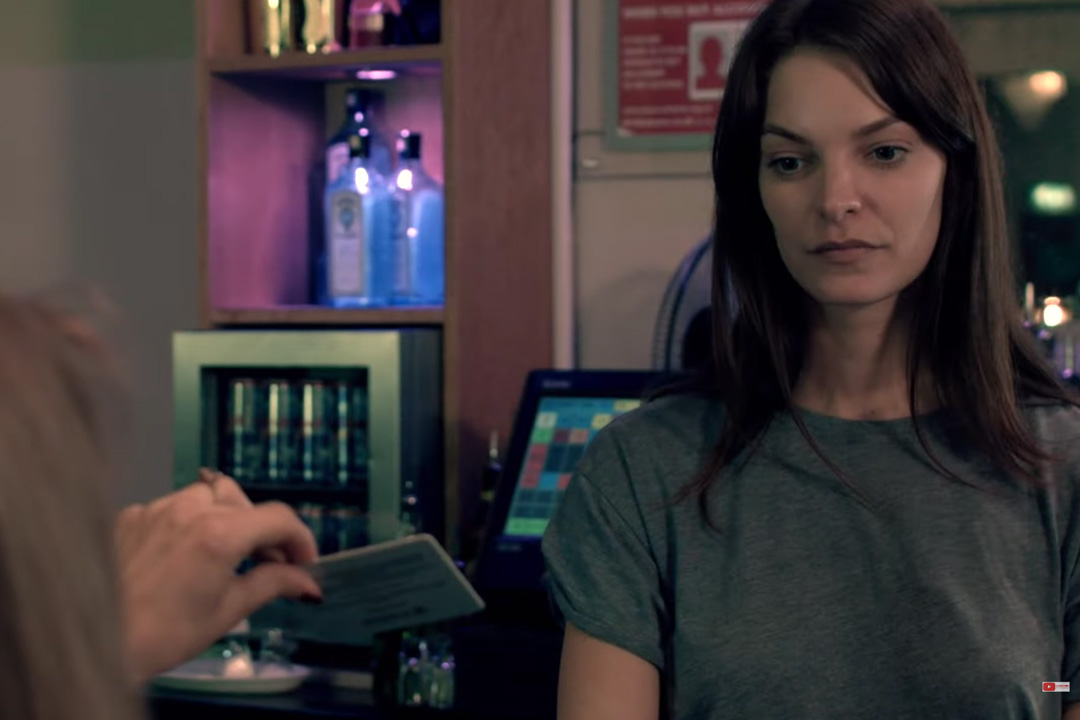
Subject 1 - The Law
Subject 1 – The Law
Any person involved in the sale or supply of alcohol has a duty to ensure that they do not commit criminal offences by breaking the law in relation to children. A child is classified as anyone under the age of 18.
Admission of unaccompanied children in licensed premises
It is illegal to:
- Allow unaccompanied children under the age of 16 to be present on licensed premises used exclusively or primarily for the sale of alcohol for consumption on the premises when they are open and being used for the supply of alcohol
- Allow unaccompanied children under the age of 16 to be on premises licensed to sell alcohol for consumption on the premises between midnight and 5am when the premises are open for the supply of alcohol.
Sale of alcohol to children
IMPORTANT – Do not under any circumstances sell alcohol to someone who is under the age of 18
The law states that you must not:
- Sell alcohol to someone under the age of 18
- Knowingly allow the sale of alcohol to someone under the age of 18. This applies to you as you have the capacity to prevent the sale.
Consequences for a Premises Licence
Should alcohol be sold to a person under the age of 18 then either Trading Standards or the Police may bring a review of the premises Licence. Sales of alcohol to persons under the age of 18 are taken viewed particularly seriously by Licensing Authorities and ultimately could lead to the revocation of a premises licence after a review application has been issued or a suspension of the premises licence for up to 3 months so that additional training and safeguards can be put in place to ensure such sales do not happen again.
Note that the above text is taken from BIIAB’s Level 1 Award in Resonsible Alcohol Retailing Workbook (10th Edition March 2013). For more information on this qualification either visit www.biiab.org or contact BIIAB’s qualification team at qualifications@bii.org. Reviewed and amended by Poppleston Allen Solicitors (October 2024).
Subject 2 - Penalties for selling to children
Subject 2 – Penalties for selling age restricted products to children
Penalties for selling alcohol and other age restricted products to children
- a) Police have the option of issuing fixed penalty fines of up to £80 90 for a number of offences on licensed premises including the sale of alcohol to any person under the age of 18.
- b) A fine of up to £5000 can be imposed if an alcohol retailer is convicted of selling alcohol to any person under the age of 18.
- c) There is also the offence of persistently selling alcohol to children which will be committed if, on two or more different occasions in a period of three consecutive months, alcohol is unlawfully sold to a person under the age of 18 on the same premises.
- d) The penalty for this offence on summary conviction is an unlimited fine. Alternatively, voluntary closure can be issued as an alternative to prosecution. A voluntary closure may last for a minimum period of 48 hours but not more than 336 hours.
- e) Should the holder of a premises licence be prosecuted for persistently selling alcohol to children the court could suspend the premises licence for up to 3 months and/or impose an unlimited fine.
The consumption and the purchase/attempted purchase of alcohol by children
- a) It is illegal for:
- Anyone under the age of 18 to purchase or attempt to purchase alcohol
- Someone over the age of 18 to purchase or attempt to purchase alcohol on behalf of someone under the age of 18.
- b) You should be aware that if the sale took place and the young person was under 18 you have broken the law and can be prosecuted.
- c) You should know that some of the risks of alcohol consumption by children are:
- Increased likelihood of involvement in crime and disorder
- Increased likelihood of drug and substance abuse
- Underachievement
- Health issues
- d) It is illegal for:
- Any person under the age of 18 to consume alcohol within licensed premises
- A member of staff to knowingly allow children to consume alcohol on the premises.
- e) The only exception to the above would be a 16 or 17 year old who is allowed to drink beer, wine or cider with a table meal, provided that an adult purchases the alcohol and an adult accompanies the young person at the meal.
- f) It is illegal to:
- Allow children under the age of 16 who are unaccompanied, on premises used exclusively or primarily for the sale of alcohol for consumption on the premises.
- Allow unaccompanied children under the age of 16 to be on premises licensed to sell alcohol for consumption on the premises between midnight and 5am when the premises are open for the supply of alcohol.
Sale of cigarettes and other age-related products to children
- a) Your premises may offer products other than alcohol, which you will need to be aware of in terms of age-related legal requirements.
It is illegal to:
- Sell fireworks to a person under the age of 18 (or under the age of 16 in the case of party poppers)
- Sell gas lighter refills to a person under the age of 18
- Sell solvent-based products to a person under the age of 18 if it is believed that the product will be used for inhalation or intoxication purposes
- Sell knives to a person under the age of 18
- Sell cigarettes to a person under the age of 18.
The law in relation to test purchasing
- a) You need to be aware that test purchasing can be used to enforce licensing law in relation to children.
- b) Police officers and weights and measures inspectors (trading standards officers) are empowered to send a person under the age of 18 into licensed premises to attempt to buy alcohol and other age-related products.
- c) The actions of the children involved in test purchasing are not considered an offence under the Licensing Act 2003.
Note that the text above is taken from BIIAB’s Level 1 Award in Responsible Alcohol Retailing Workbook (10th Edition March 2013). For more information on this qualification either visit www.biiab.org or contact BIIAB’s qualification team at qualifications@bii.org. Reviewed and amended by Poppleston Allen Solicitors (October 2024).
Subject 3 - Proof of age
Subject 3 – Proof of Age
Proof of age
- a) If you are in any doubt about a person’s age you must ask them to provide you with proof of age. By doing so, then provided you believed the young person was over the age of 18 and the proof of age provided to you would have convinced a reasonable person that the young person was over the age of 18 then you have a legal defence should you be prosecuted for selling alcohol to a person under the age of 18
- b) Acceptable forms of proof of age are:
- Driving licence with a photograph
- Passport
- A card issued by a recognised scheme which carries a PASS hologram.
Please note your company may have their own policy on acceptable forms of proof of age; therefore, it would be of benefit for you to ask a relevant colleague such as a personal licence holder or the designated premises supervisor what the policy is.
- c) Each premises selling alcohol must have an age verification policy requiring staff to check the ID of anyone appearing to be under the age of 18 (or whatever higher age is specified in the policy).
- d) It should be noted that some companies advise their staff to ask for proof of age if the customer appears to be under the age of 21 or even under 25 to ensure that no mistakes are made.
- e) When proof of age is produced, you should:
- Compare the photograph to the person’s face. In particular look at the cheekbones, the forehead, nose, ears and weight. Some peoples’ body compositions change, but inconsistencies can be a telling sign that the ID does not belong to the person who is using it
- Check that the eye colour of the person matches that in the photograph. Any difference would suggest that the ID does not belong to the person using it
- Check the date of birth to ensure that the person is over the age of 18
- Look to see if the ID is current and valid. If a card, licence or passport has expired it is not valid ID
- Ask for the person’s star sign. Most people know immediately whether they are a Scorpio or a Leo. If the person stumbles, it may be a borrowed ID. Ask to see a 2nd or 3rd form of ID.
Most people will carry credit or debit cards that should back up the name on the ID that they are presenting. Finally, ask for a signature, and then compare it to the signature on the ID. Handwriting styles do change sometimes, but this can be an indicator that the ID is suspicious
- Check for tampering. Are there raised edges around the photo indicating that a picture has been added on top of the original?
- Look out for fake ID. Are any of the numbers or words fuzzy as this might indicate low quality printer ink? Any misspelling on the document should instantly make the ID very suspicious. Does the photo have red eye? Do the holograms flake off if you scratch them? Are there bubbles under the lamination? Swipe the magnetic strip if the card has one. Does the information on it not read properly? Any of these things can indicate a poorly made fake.
- f) If you are presented with what appears to be valid proof of age, but still have doubts, you must refuse service.
- g) Checking customers’ age is an important role for the responsible alcohol retailer, and can be made more difficult by these factors:
- Clothing
- Deception
- Busy premises
- Intimidation
- Large groups
- Threatening behaviour.
- h) Despite these factors you have an absolute duty to refuse service. If you have problems, you should seek support from a relevant colleague such as a personal licence holder or the designated premises supervisor. The Portman Group offers a free booklet which offers guidance on this entitled ‘Saying no to under-age drinker’s’.
- i) Cards accredited by the PASS scheme are recommended as they carry a hologram that makes them difficult to forge. They also have to meet rigorous accreditation standards to become a member of the PASS scheme.
- j) If you have to refuse service it is useful to offer application forms in order for customers to obtain PASS accredited proof of age cards.
- k) Cards currently accredited by the PASS scheme include:
- CitizenCard
- Validate UK
- Young Scot
A number of local authorities also issue their own proof of age cards under PASS accredited schemes.
- l) PASS accredited schemes are supported the Association of Chief Police Officers (ACPO).
- m) Many licensed premises have adopted a Challenge 21 or Challenge 25 policy for dealing with proof of age. This requires staff to request the customer to prove that they are over 18, if they believe them to be under the age of 21 or 25. A poster used in these premises that has been produced by the BBPA is provided as Appendix 5 to this handbook.
- n) Your premises may have door supervisors employed to check for identification and to control entry. However, you should never assume that everyone’s ID has been checked; it is still your responsibility as the person selling the alcohol to check identification if you have any doubt and to refuse service where necessary
Note that the text above is taken from BIIAB’s Level 1 Award in Responsible Alcohol Retailing Workbook (10th Edition March 2013). For more information on this qualification either visit www.biiab.org or contact BIIAB’s qualification team at qualifications@bii.org. Reviewed and amended by Poppleston Allen Solicitors (October 2024).